
Can Retained Earnings Have a Debit Balance?

For this reason the account balance for items on the left hand side of the equation is normally a debit and the account balance for items on the right side of the equation is normally a credit. Yes, retained earnings are a key component of equity because they represent the part of net income a company retains and reinvests into the business. Retained Earnings are credited with the Net Profit earned during the current period.

Contra Accounts
Since an increase in ownership claim signifies a positive change for the business, equity does retained earnings have a debit or credit balance accounts, including retained earnings, normally carry a credit balance. A company’s net income or net loss, determined at the end of an accounting period, directly affects the retained earnings account. Net income represents the profit remaining after all expenses, including taxes, have been deducted from revenues. This profit signifies an increase in the company’s overall wealth, and as such, it contributes to the accumulated earnings retained within the business.
- When reinvested, they are recorded as retained earnings in the equity section of the balance sheet.
- Find out how this alternative financing method works, with its many advantages.
- A cash dividend results in a cash outflow and reduces the company’s liquid assets, while stock dividend distributions transfer retained earnings to common stock.
- Conversely, a net loss reduces accumulated earnings, decreasing the retained earnings balance.
- So for example there are contra expense accounts such as purchase returns, contra revenue accounts such as sales returns and contra asset accounts such as accumulated depreciation.
- A credit to the retained earnings account increases its balance, reflecting accumulated profits.
Add Your Net Income (or Net Loss) from the Current Period
When a company declares a stock dividend, retained earnings are reduced, and common stock and additional paid-in capital accounts are increased. A cash dividend reduces cash (asset, debit on balance sheet) andreduces retained earnings (part of equity, credit on balancesheet). Usually, a post-closing trial balance is prepared after theclosing process; therefore. It contains balance sheet accounts.Only balance of retained earnings is different, the rest are thesame of balance sheet or adjusted trial balance. The retainedearnings are equal the retained earnings in the retained earningsstatement. Retained earnings refer to the historical profits earned by a company, minus any dividends it paid in the past.
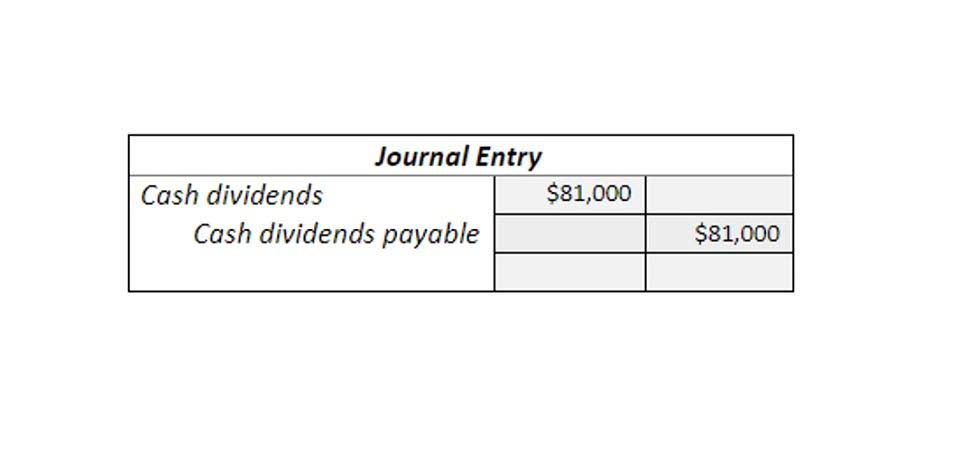
Does a cash dividend affect the balance sheet?
It serves as a tool for internal control and provides stakeholders with a clear understanding of how retained earnings have evolved during a specific accounting period. Dividends are a portion of a company’s profits paid out to shareholders, and they represent a direct reward for investment in the company. The decision to pay dividends and the amount to distribute comes at the discretion of the company’s management, typically with the approval of the board of directors. Beyond the balance sheet, the statement of retained earnings (or statement of changes in equity) provides a detailed reconciliation of the retained earnings balance over a period. It then adds net income (or subtracts net loss) for the current period and subtracts any dividends. The resulting figure is the ending retained earnings balance, which carries over to the current balance sheet.

- Conversely, a net loss will decrease retained earnings, and this reduction is recorded as a debit to the account.
- Like other equity accounts, they typically carry a normal credit balance, as increases to equity are credits.
- Thus, it is a liability of the company and it is credited as per the golden rules of accounting for personal accounts.
- The decision to pay dividends and the amount to distribute comes at the discretion of the company’s management, typically with the approval of the board of directors.
- Retained earnings are therefore an accounting entry which acts as a reserve for unallocated earnings, pending arbitration.
- For example, a company might declare dividends even when it has minimal or negative accumulated earnings, perhaps to maintain investor confidence or meet prior commitments.
- This article clarifies the nature of retained earnings, explaining their role within a company’s financial structure and how various business activities influence their balance.
This accumulation of undistributed profits enhances the overall equity of the business. Therefore, any transaction that positively impacts retained earnings will be reflected as a credit to this account. Alternatively, if it is to correct the understatement of prior period net income, the company will credit the retained earnings in the journal entry instead. Income summary is a temporary account that is used at the end of the period to close all income and expenses in the income statement.

Example 4: Closing Dividend Account
- Instead, if a company’s success is to be analyzed, the various income statement ratios or business valuation methods could be used.
- On this statement, retained earnings represents the cumulative profits accumulated over its operating history, minus any losses and dividends.
- In the same period, the company issued $2.82 of dividends per share, while the total earnings per share (diluted) was $18.32.
- When a company declares a stock dividend, retained earnings are reduced, and common stock and additional paid-in capital accounts are increased.
This debit reflects the reduction in the accumulated profits that are no longer being retained by the company but are instead being paid out to shareholders. For example, if a company declares $10,000 in cash dividends, the retained earnings account would be debited by $10,000, thereby reducing the total amount of accumulated earnings. When a company reports net income, this amount is ultimately transferred to the retained earnings account. This transfer is recorded as a credit to retained earnings, which increases its balance, consistent with the rules for equity accounts. For example, if a business earns a net income of $50,000 for the year, this $50,000 would be credited to retained earnings, thereby increasing the total accumulated Accounting Security profits. Beyond the balance sheet, retained earnings is also a central element of the Statement of Retained Earnings, or often, the broader Statement of Changes in Equity.
- The main change from an adjusted trial balance is revenues, expenses, and dividends are all zero and their balances have been rolled into retained earnings.
- Contra accounts are accounts that have an opposite debit or credit balance.
- Retained earnings represent the cumulative amount of net income that a company has retained, rather than distributed as dividends to shareholders.
- Positive retained earnings signify financial stability and the ability to reinvest in the company’s growth.
- This statement effectively reconciles the starting and ending amounts, offering transparency into how profits are managed—either reinvested to fuel future growth or distributed to shareholders.
What Happens During a Closing Entry
A cash dividend results in a https://miss-phillips.com/mastering-accounts-payable-audits-a-cfo-s-guide/ cash outflow and reduces the company’s liquid assets, while stock dividend distributions transfer retained earnings to common stock. On the Balance Sheet, retained earnings are presented within the owner’s equity section, alongside other equity components like common stock. This placement highlights its role as a claim on the company’s assets by its owners, derived from reinvested profits. Retained earnings are a fundamental concept in financial accounting, illustrating a company’s financial health and strategic decisions. Understanding whether retained earnings typically hold a credit or debit balance provides insight into how a business manages its accumulated profits. This article clarifies the nature of retained earnings, explaining their role within a company’s financial structure and how various business activities influence their balance.